LS vs. LT vs. RS: Chevrolet Trim Differences Explained
Scroll through Chevrolet's trim names long enough and they start to blur together. LS, LT, RS, each sounds close enough to the others that it's easy to assume the differences are minor. They're not always minor, and knowing what actually separates them saves you from either overpaying for features you won't use or underbuying and missing something you actually wanted.
LS: The Starting Point
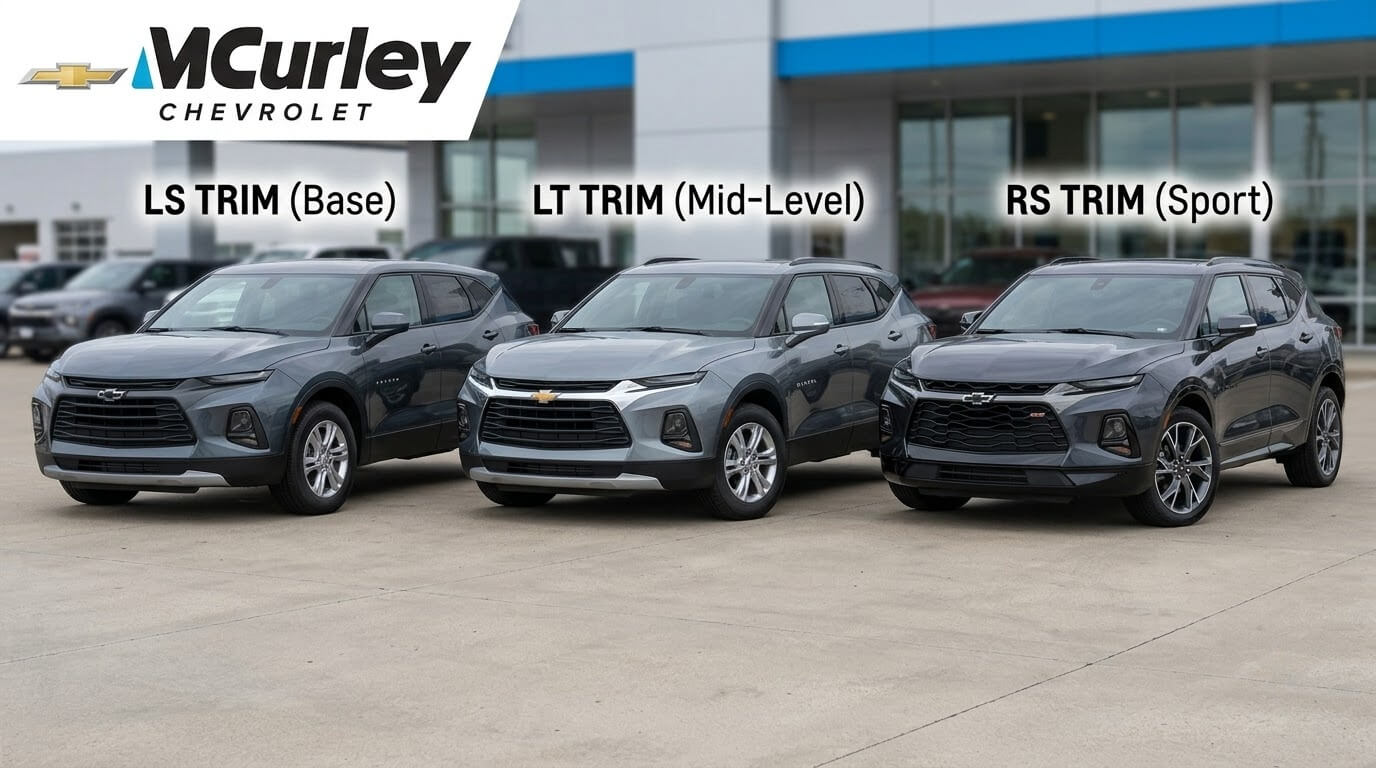
LS sits at or near the base of most Chevrolet trim lineups. It covers the essentials: a functional infotainment touchscreen, standard safety features, and the core engine option for that model. LS trims are built for buyers who want a dependable vehicle without paying extra for features they won't regularly use. It's not stripped down in a way that feels incomplete, it's simply focused on what most daily drivers actually need.
LT: Where Most Buyers Land
LT sits above LS and typically adds a meaningful jump in features relative to the price increase. That often includes a larger touchscreen, additional safety technology like blind spot monitoring, and nicer interior materials. For a lot of buyers, LT ends up being the sweet spot, since the added cost tends to be offset by genuinely useful upgrades rather than just cosmetic changes. Depending on the model, LT sometimes splits into multiple sub-levels, so it's worth checking model-specific trim details rather than assuming LT means identical features across every Chevrolet.
RS: Styling and Sport-Oriented Details
RS trim focuses primarily on appearance and driving feel rather than adding major new capability. Expect styling elements like blacked-out trim, unique wheels, and sometimes minor suspension or performance tweaks depending on the model. RS isn't necessarily a step directly above LT in terms of features across the board, it's more of a styling-focused variant that appeals to buyers who want a sportier look without necessarily paying for the top-tier luxury trim.
How These Trims Compare Across Different Models
Trim naming isn't perfectly consistent across every Chevrolet model. What LT includes on an Equinox may not match exactly what LT includes on a Silverado, since feature sets are tailored to each vehicle's typical use case. Trucks tend to emphasize towing and payload-related features at each trim step, while SUVs and sedans tend to emphasize comfort and infotainment upgrades instead.
What Higher Trims Add Beyond RS
Above RS, trims like Premier or High Country typically bring leather seating, premium audio systems, larger touchscreens, and the fullest suite of available driver assistance technology. These trims carry a real price jump over LS, LT, or RS, and whether that jump is worth it depends entirely on how much you personally value those specific comfort and convenience features.
Deciding Which Trim Fits You
The right trim usually comes down to being honest about which features you'll use regularly. It's easy to get pulled toward a higher trim's features while sitting in a showroom, but that excitement doesn't always translate to daily use once the vehicle is actually in your driveway. Our Pasco team walks buyers through this regularly, focusing on actual driving habits rather than pushing a blanket recommendation toward the highest trim available.
Trim Availability Locally
Not every trim sits in stock at every dealership at all times, and demand for certain trims shifts based on regional preferences. In the Tri-Cities, higher trims on trucks and SUVs tend to move faster given local demand for both capability and comfort features together. If a specific trim isn't currently available, building and ordering it directly is often a better path than settling for a different configuration.
Making the Decision Easier
Once you understand what LS, LT, and RS actually mean for the specific model you're considering, the decision gets a lot less confusing. Focus on which features you'll genuinely use, check how trim levels affect capability if towing or hauling matters to you, and don't assume a higher trim name automatically means a better fit for your situation.
Explore All Trim LevelsLT typically adds more standard tech and safety features compared to LS, which covers the essential features most buyers need.
Not necessarily better, just different. RS focuses mainly on styling and driving feel, while LT often includes more functional feature upgrades.
Not exactly. Feature sets vary by model since trims are tailored to each vehicle's typical use, so it's worth checking model-specific details.
If styling and sportier appearance aren't priorities for you, LT trim may offer better practical value for the price.
Towing capability sometimes depends more on specific trim packages than trim name alone, so it's worth checking whether your preferred trim supports the towing capacity you need.
Yes, building and ordering the exact trim and options you want is often a better path than settling for a different in-stock configuration.