Every 5,000 to 7,500 Miles: Oil Changes and Basic Checks
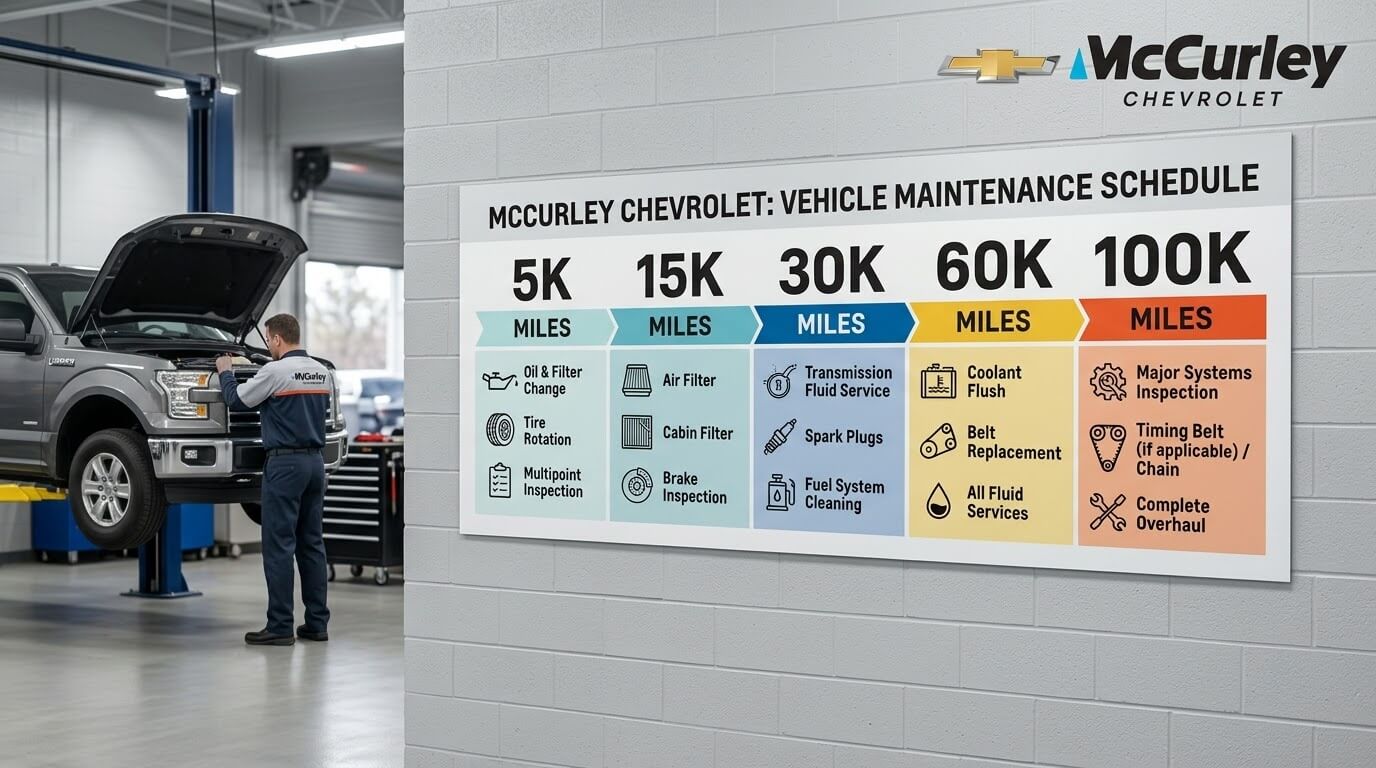
Most Chevrolet models call for an oil change somewhere between 5,000 and 7,500 miles, depending on your specific model, engine, and driving conditions. This is also a good checkpoint for a quick look at tire pressure, fluid levels, and general condition. Drivers who tow regularly or drive frequently on dusty gravel roads outside Pasco may need slightly more frequent checks, since those conditions add extra strain compared to typical commuting.
Around 15,000 Miles: Tire Rotation and Brake Inspection
Tire rotation typically falls around this mark, helping tires wear evenly and extending their overall lifespan. This is also a sensible point for a brake inspection, checking pad thickness and rotor condition before wear becomes a bigger issue. Catching brake wear early is far cheaper than waiting until you hear grinding or feel reduced stopping power.
Around 30,000 Miles: A Bigger Checkpoint
This mileage mark often includes a more thorough inspection covering air filters, cabin filters, and fluid replacement for items like transmission fluid, depending on your specific model's schedule. It's a good point to address anything that's been on the edge of needing attention, rather than waiting for a small issue to become a bigger one.
Around 60,000 Miles: Bigger Components Come Into Play
By this mileage, items like spark plugs, belts, and certain hoses may need attention depending on your specific engine and model. This mark also tends to be when brake pads on many vehicles need full replacement rather than just inspection, particularly for drivers who do a lot of city driving with frequent stops.
Around 100,000 Miles: Major Service Milestones
This mileage often marks bigger-ticket maintenance items like timing belt or chain inspection, coolant system flushes, and a full review of major components. It's worth budgeting for this stage in advance, since it can involve a larger service bill than the more routine visits leading up to it.
How Towing Changes Your Maintenance Needs
Regular towing, common around here given how close the Columbia River sits to Pasco, adds extra stress to transmission and brake systems specifically. Owners who tow frequently should consider more frequent transmission fluid checks and brake inspections between scheduled mileage markers, since towing accelerates wear on those systems compared to standard driving.
How Local Driving Conditions Affect Your Schedule
Dusty gravel roads outside city limits can accelerate air filter wear, while summer heat puts extra strain on cooling systems and battery life. Tri-Cities drivers spending significant time on unpaved roads or dealing with extended heat exposure may benefit from checking these specific items slightly more often than the standard mileage schedule suggests.
Why Skipping Maintenance Costs More Later
It's tempting to push a service appointment back when a vehicle seems to be running fine, but skipped maintenance is one of the most common reasons for avoidable, expensive repairs. A missed transmission fluid change, for example, can lead to much costlier transmission repairs down the road, turning a routine service into a major expense.
Keeping Documentation for Warranty and Resale
Maintaining a documented service history matters beyond just staying on schedule. It supports warranty claims that require proof of scheduled maintenance, and it significantly boosts resale or trade-in value, since a documented history signals to future buyers or dealers that a vehicle was well cared for.
Staying on Top of Your Schedule
The easiest way to stay current is scheduling routine visits before something starts feeling off, rather than waiting for a warning light or an obvious issue. Our Pasco service team can walk you through your specific model's schedule and flag anything that local driving conditions might affect sooner than the standard timeline suggests.
See the Full Maintenance GuideMost models recommend an oil change every 5,000 to 7,500 miles, though your specific interval depends on model and driving conditions.
This mark often includes air filter replacement, cabin filter checks, and fluid replacement like transmission fluid, depending on your specific model.
Yes, regular towing adds extra stress to transmission and brake systems, so those items may need more frequent attention between scheduled checkpoints.
This milestone often includes timing belt or chain inspection, coolant system flushes, and a full review of major components.
Yes, dusty gravel roads can accelerate air filter wear, and summer heat adds strain to cooling systems, both worth checking slightly more often locally.
Skipped maintenance is a common cause of avoidable, more expensive repairs later, so staying current on your schedule saves money over time.